
How to Reduce Echo in Large Commercial Spaces
Large commercial spaces often look impressive; however, they can also create significant acoustic challenges. High ceilings, hard surfaces, and open layouts frequently cause sound waves to bounce throughout the room, making conversations difficult to understand. As a result, excessive echo can negatively affect employee productivity, customer experience, and overall comfort.
Fortunately, echo can be effectively reduced through proper acoustic treatment. In this article, we will explore the main causes of echo and the most effective solutions for improving commercial acoustics.
What Causes Echo in Commercial Spaces?
Echo occurs when sound waves are reflected by hard surfaces instead of being absorbed. In many commercial buildings, materials such as concrete, glass, metal, and tile are widely used. Consequently, sound energy is reflected multiple times before it gradually fades away.
The following environments are commonly affected by echo:
- Open-plan offices
- Restaurants and cafés
- Hotel lobbies
- Retail stores
- Conference rooms
- Educational facilities
In many cases, acoustic performance is overlooked during the design stage. Therefore, echo problems are often discovered only after the space begins to be used regularly.
Why Reducing Echo Is Important
When excessive echo is present, communication becomes more difficult. Employees may need to repeat themselves more often, while customers may find conversations uncomfortable.
Furthermore, poor acoustics can contribute to increased stress levels and reduced concentration. In busy commercial environments, productivity can be negatively impacted when background noise is constantly amplified.
For this reason, acoustic treatment should be considered an essential part of modern commercial design rather than an optional upgrade.
Install Acoustic Wall Panels
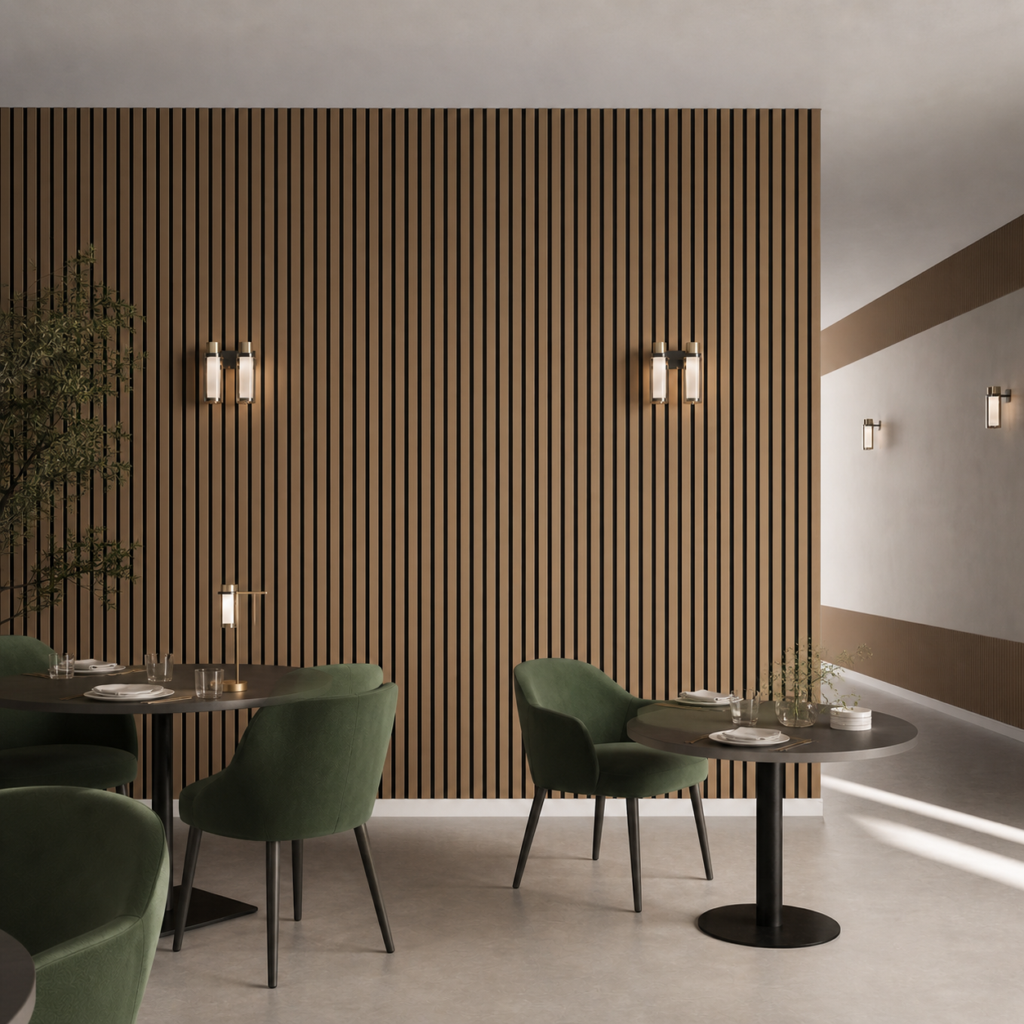
One of the most effective ways to reduce echo in commercial spaces is through the installation of acoustic wall panels.
These panels are specifically designed to absorb sound energy before it can be reflected back into the room. As a result, reverberation time can be significantly reduced.
PET acoustic panels have become increasingly popular because they offer both acoustic performance and aesthetic flexibility. In addition, they are available in a wide range of colors, patterns, and finishes that can complement modern interiors. Additionally, many PET materials are manufactured from recycled plastic sources, contributing to more sustainable interior solutions.
In many commercial projects, acoustic wall panels are strategically placed on large wall surfaces where sound reflections are most likely to occur.
Use Acoustic Ceiling Panels
While wall treatments are important, ceiling surfaces should not be ignored.
In large commercial spaces, a substantial amount of sound is reflected from overhead surfaces. Therefore, acoustic ceiling panels are often installed to provide additional sound absorption.
When ceiling panels are properly positioned, overall acoustic performance can be greatly improved. Moreover, noise levels can be distributed more evenly throughout the space.
Acoustic ceiling solutions are particularly effective in:
- Open offices
- Restaurants
- Auditoriums
- Educational buildings
- Large meeting rooms
As a result, speech clarity can be enhanced and unwanted reverberation can be minimized.
Incorporate Sound-Absorbing Materials
In addition to acoustic panels, other sound-absorbing materials can help control echo.
For example, carpets, upholstered furniture, curtains, and fabric-covered surfaces can absorb sound that would otherwise be reflected.
Although these materials may not replace dedicated acoustic products, they can provide additional acoustic benefits when used alongside professional solutions.
Consequently, a more balanced acoustic environment can be achieved.
Design with Acoustics in Mind
The most successful acoustic results are usually achieved when acoustics are considered early in the design process.
Rather than attempting to solve echo problems after construction is completed, acoustic solutions should be integrated into the initial planning stage. By doing so, better performance can often be achieved at a lower overall cost.
Additionally, acoustic treatments can now be incorporated into modern interior designs without compromising aesthetics.
Today, many acoustic products are designed to function as decorative elements while simultaneously improving sound absorption.
Conclusion
Echo is a common problem in large commercial spaces; however, it can be effectively controlled with the right acoustic strategy.
By installing acoustic wall panels, using acoustic ceiling panels, incorporating sound-absorbing materials, and considering acoustics during the design phase, commercial environments can become more comfortable and functional.
Ultimately, improved commercial acoustics can lead to better communication, enhanced productivity, and a more enjoyable experience for employees, customers, and visitors alike.
About TYNE New Material Technology
TYNE New Material Technology (Thailand) Co., Ltd. is a leading manufacturer specializing in the production of interior acoustic panels and the assembly of acoustic modules. Located in Thailand, our 6,000 sqm factory employs advanced technology, including automatic production lines for polyester panels and CNC cutting equipment, to deliver a diverse range of products. From standard engineering sheets to DIY sound-absorbing kits, we cater to global markets to meet your business needs.
We adhere to strict ISO 9001:2015 quality management systems, ensuring that every container shipped meets international standards for fire safety (ASTM E84 Class A or EN 13501 Class B) and low formaldehyde emissions. Our commitment to eco-friendly production involves using recycled PET materials to create sustainable, high-quality acoustic solutions that elevate industry standards.
Looking for OEM acoustic panel manufacturing services? Contact TYNE to discuss custom acoustic panel solutions for your brand or project.
Contact us
Call: +(66) 65-237-5578
Email: support@tyneacoustic.com
Website: tyneacoustic.com